
Manger, Cave, or Katalomati?
Discover the real setting of Christ’s birth beyond the familiar manger scene. Was it a wooden stable, a cave, or a katalomati? This article explores historical context and symbolism, revealing the humility and rejection Jesus faced from the very beginning
12/8/2025
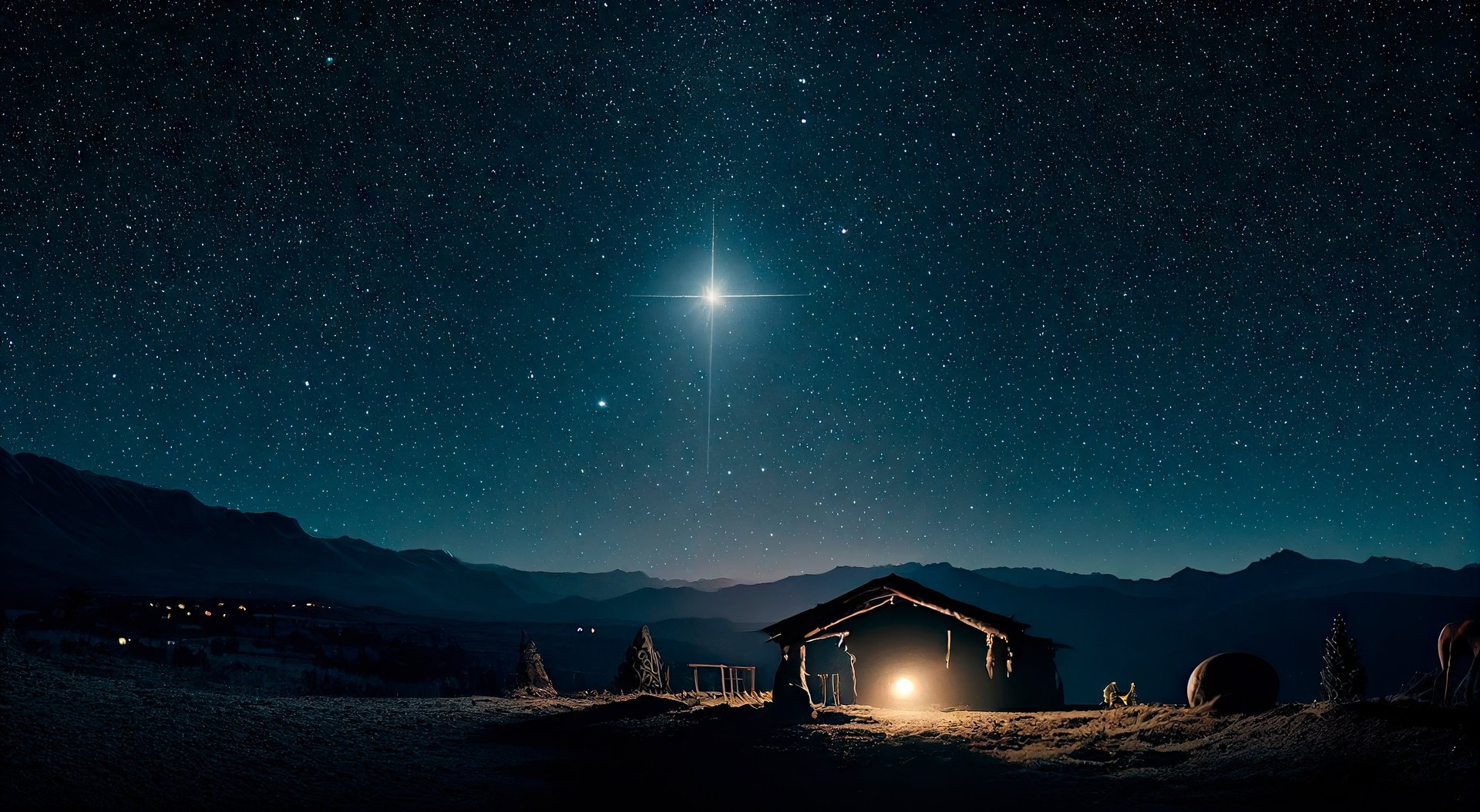
You are most likely familiar with the traditional manger scene with baby Jesus (usually the size of a five- or six-month-old child not a newborn ;0) ), Mother Mary, Joseph (sometimes), a shepherd, three wise men, a lamb, cow, and donkey in a wooden barn with a box manger. This was the way a stable looked in the middle ages when the creche became a popular Christmas decoration for churches and eventually for the homes as well. It was familiar and what the people of the day would have recognized as a stable. More than likely, it was not the way it looked when Mary and Joseph came to it. Wood was not an abundant resource in Israel, and stone and caves were more likely a ready way to house the outside animals.
In the hills surrounding Bethlehem there were caves that would have been utilized as stables. If you have ever watched the miniseries Jesus of Nazareth from 1976 there was a cave depicted as the stable for the birth of Christ. They did a good job of representing what that would have looked like. This became an accepted interpretation of the birth of Christ in the 1970’s and 80’s. The cave would have been far from town, and the couple would have been on their own. A good picture of what probably took place.
Let me suggest a third option, a katalomati. Even today in remote areas of the Middle East you can find these unique style “inns”. They consist of a circle of three-sided lean-to’s which are rented for a night’s sleep. Sometimes a fence surrounds the encampment. Sometimes there are armed guards for protection. Sometimes both, sometimes neither. This type of inn dates back to before the time of Christ.
Bethlehem was very much a little backwater town. It most likely did not host a proper inn, although, it is a possibility due to its proximity to Jerusalem. There is a good likelihood that the inn mentioned in Luke’s account of the birth of Jesus is a katalomati. No room at the inn would mean no lean-tos inside the protection of the circle were available. The stable would not have been a building in this case. The inn keeper would stable the animals in the center of the circle, providing protection and feed for the travelers’ animals. If this was the scene Jesus was born into Mary gave birth in the center of the circle, under the stars, while the travelers ignored her cries of pain and humility.
In this scenario, I find a strong picture of the rejection Christ received from those he came to save. From the moment of birth, he did not fit their image, being born in a stable not a castle. He was/is the stone the builders rejected (Ps.118:22; Matt. 21:42). Left to face his first night with those nearby ignoring him. The shepherds came when the angels directed them to go. Eventually the magi show up, finding the child in a house not a stable (Matt. 2:11). The travelers in the inn, under the protection of a roof and walls did not offer his mother privacy; nor did they offer him protection from the outside. As on the mount of Golgotha, he was utterly rejected.
I know, I know, Cheri why are you raining on our Christmas celebration. This is Joy to the World, Angles singing, Shepherds proclaiming! Right?
Well, absolutely, but to completely ignore the fact that Jesus came knowing he would be rejected his whole life does an injustice to the full story of redemption. It starts with this amazing situation where God takes on flesh and becomes one of us! It ends with his overwhelming love for us holding him on one of the most diabolical death contraptions to ever be conceived. The bookends of Christmas and Resurrection Sunday offer us so much opportunity to rejoice, to bless the name of the Almighty, to praise and worship the Author and Finisher of our faith. Yet, it cost him everything. It was a calculated decision to face hatred, humiliation, and the rejection of the very ones who should have known better. I have to take just a moment to remember that. And I hope you will also.
Inspiration
Stories and poems celebrating women's journeys in faith.
Creativity
Community
© 2025. All rights reserved.